Ask any crew that runs drain calls what clogs the most kitchen sinks, and you'll get the same one-word answer: grease. Not forks, not coffee grounds, not the occasional bottle cap — grease. It's the number-one reason a kitchen line slows down and eventually stops, and it's also the easiest clog to prevent once you understand how it builds. Here's what's happening inside your pipe, and the handful of habits that keep your kitchen draining the way it should.
Why grease is such a problem
The trap with fats, oils, and grease — what the trade calls "FOG" — is that they go down the drain as a warm liquid and don't stay that way. A few feet into the line, where the pipe is cool, that liquid grease congeals and sticks to the pipe wall. Every greasy rinse adds another thin coat. Over months, the inside of the line narrows like a clogged artery until one ordinary dinner cleanup is the one that tips it into a full clog.
And it's not just bacon grease or fryer oil. Butter, salad dressing, gravy, mayonnaise, the fat that rinses off a dinner plate, even dairy — they all add to the same buildup. Hot water and dish soap feel like they're carrying it away, but they only push the problem a little farther down the line before it cools and sticks anyway.
The habits that keep a kitchen line clear
- Grease goes in a can, not the sink. Pour cooled cooking grease into an old jar or can and toss it in the trash. This single habit prevents more kitchen clogs than anything else.
- Scrape plates into the trash before rinsing. Wipe greasy pans with a paper towel before they hit the sink. Less FOG down the drain, less buildup on the wall.
- Run cold water with the disposal, not hot. Cold keeps any fats firm so they get chopped and flushed instead of smearing the line. And the disposal isn't a trash can — it handles scraps, not bones, fibrous peels, or grease by the cupful.
- Use a sink strainer. A cheap basket strainer catches food bits before they ever start a snag for grease to build on.
- Don't trust "flushable." Wipes and similar products don't break down like toilet paper and love to catch on greasy spots in the line.
When buildup has already started
If your kitchen sink is already draining slower than it used to, grease is very likely the reason — and at that point, habits alone won't undo what's already on the pipe wall. This is where the right tool matters, and it's worth knowing the difference:
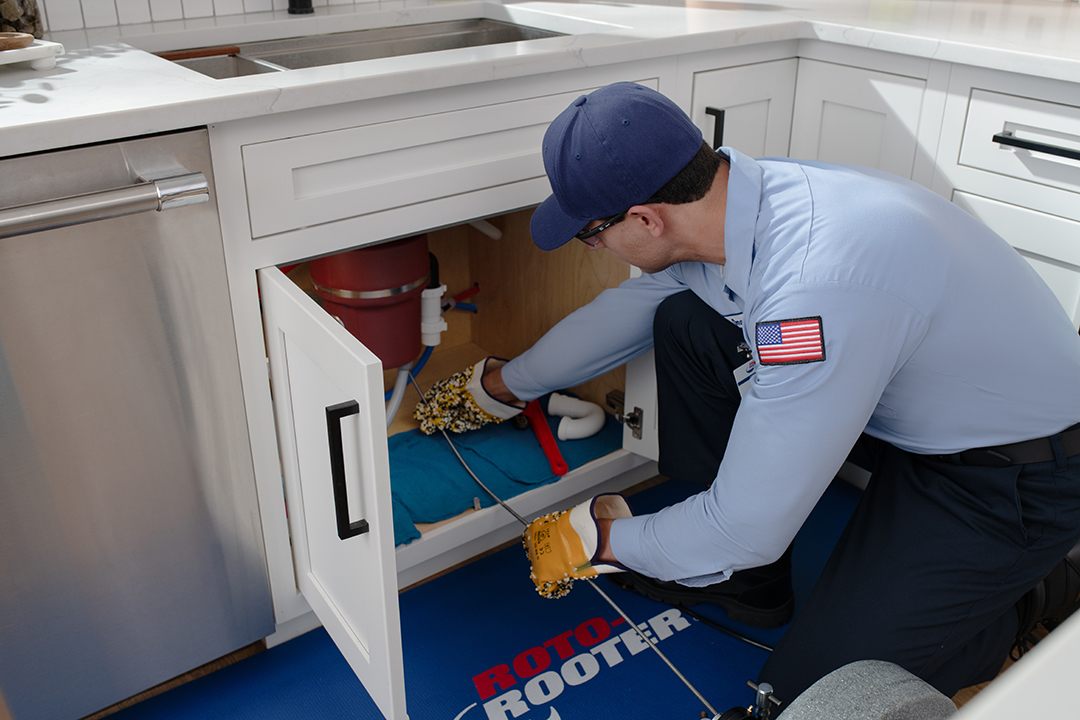
A cable (snake) cuts a channel through the clog and gets the drain flowing again — fast, and often all you need. But the pipe walls are still coated with hardened grease. Hydro jetting uses high-pressure water to scrub the line wall-to-wall, clearing grease and scale all the way back to bare pipe. For a kitchen line that keeps clogging on roughly the same schedule, jetting is the longer-lasting fix because it removes the cause, not just the current blockage.
Rule of thumb: if the same kitchen line clogs twice in a year, the third call should be a jetting call — you're not clearing a clog anymore, you're cleaning a coated pipe.
A word on prevention products
For homes that fight recurring slow kitchen drains, a preventive maintenance treatment like Pipe Shield can help. It's a commercial-grade formula that digests the grease, soap, and fat that coat pipe walls over time. Used on a monthly schedule, it keeps a clean line clean and heads off the slow buildup that turns into emergency calls. It's not a substitute for clearing a line that's already clogged — but it's a smart habit once your line is flowing freely again.
Signs your kitchen line is fouling up
- The sink drains noticeably slower than it did a few months ago.
- You hear a gurgle from the drain as the last of the water goes down.
- A faint, musty smell lingers around the drain even when it's not in use.
- You've snaked it yourself and it clogged again within a few weeks.
Catch it at the "slow" stage and it's a simple service call. Wait until it's fully stopped on a holiday with a sink full of dishes, and it's a worse evening than it needed to be.
The bottom line
Kitchen clogs are almost always a grease story, and grease is one of the few drain problems you have real control over. Keep FOG out of the sink, give the line a deeper clean when buildup has set in, and your kitchen drain stays boring — which is exactly what you want from a drain.
We run kitchen drain calls across all seven Eastern Idaho counties — Idaho Falls, Ammon, Rexburg, Sugar City, Blackfoot, Shelley, Rigby, Ririe, Terreton, St. Anthony, Ashton, Island Park, Driggs, Victor, and Dubois. If your kitchen sink is slowing down, call (208) 523-4212 or visit the drain cleaning page.