If you own an older home in Eastern Idaho with mature trees in the yard, tree roots are the single most stubborn thing we pull out of a sewer line. They're not after the pipe — they're after what's inside it: a steady supply of warmth, water, and nutrients that no patch of dry Idaho soil can match. Once a root finds that, it keeps coming. Here's how roots get into a line, why cabling them out isn't the end of the story, and the maintenance that actually keeps them in check.
How roots get into a sewer line
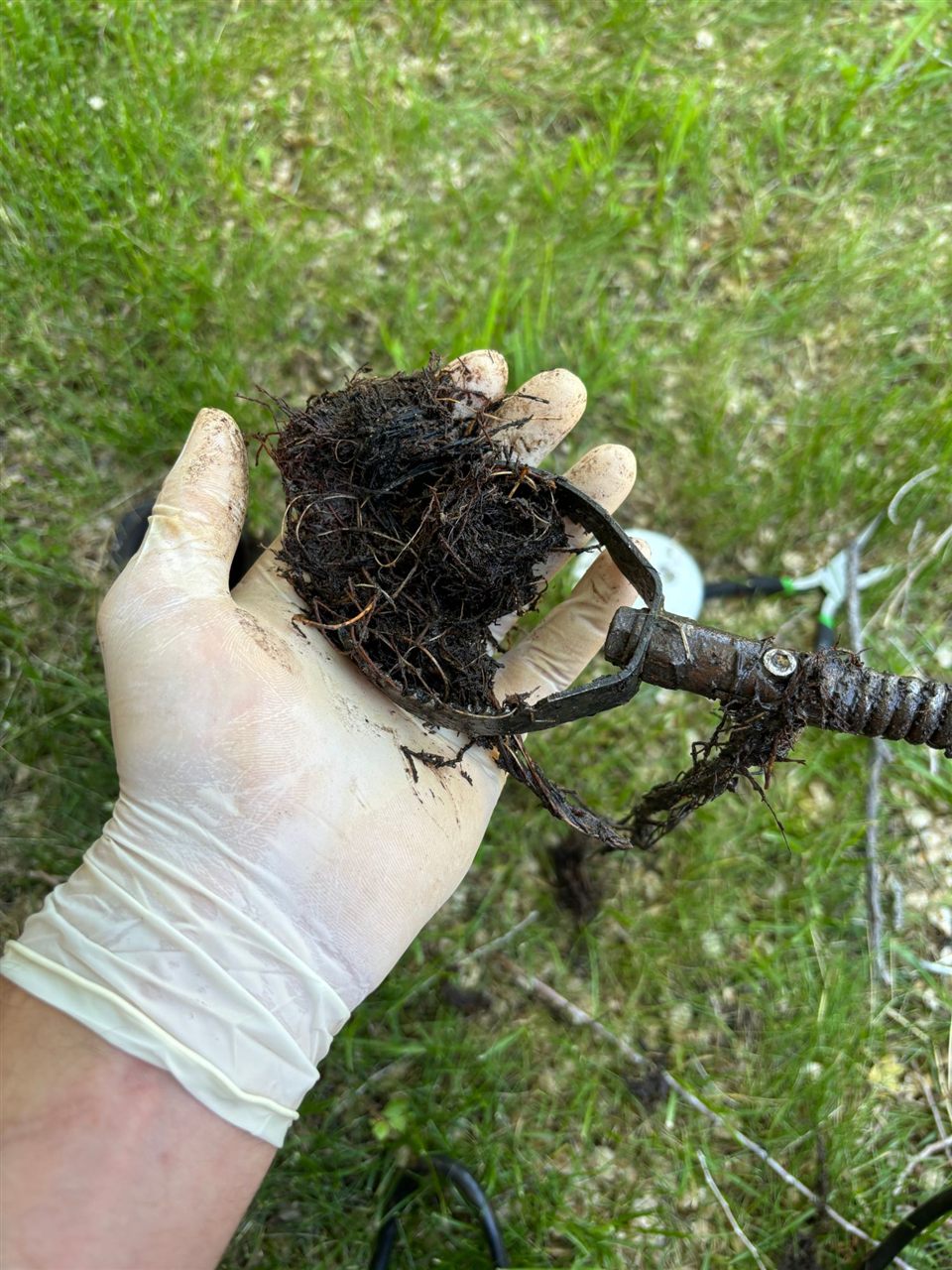
A sewer line doesn't have to be broken for roots to find it. Most lines leak a tiny amount of vapor at the joints — the warm, moist air is exactly what a root follows. When a fine root tip reaches a hairline crack or a slightly loose joint, it slips in, drinks, and then grows. What started as a thread thickens into a rope, and the rope fans out into the mat you see above.
Older pipe materials are the most vulnerable, simply because they have more places to get in:
- Clay tile — common in older Eastern Idaho neighborhoods. Joined in short sections, so it has lots of seams for roots to exploit.
- Cast iron — durable, but decades of use leave it pitted and scaled, and the joints loosen over time.
- Orangeburg — a tar-paper pipe used mid-century. It softens and deforms with age, which opens the door wide.
Newer PVC lines with glued joints are far more root-resistant, but even they aren't immune if a joint was poorly made or the pipe gets damaged.
It's not just the main sewer line
A common misconception is that roots only invade the big main line out to the street. They don't. Roots will work their way into any underground pipe with a small crack or a loose joint — including branch lines, laundry lines, and basement floor drains.
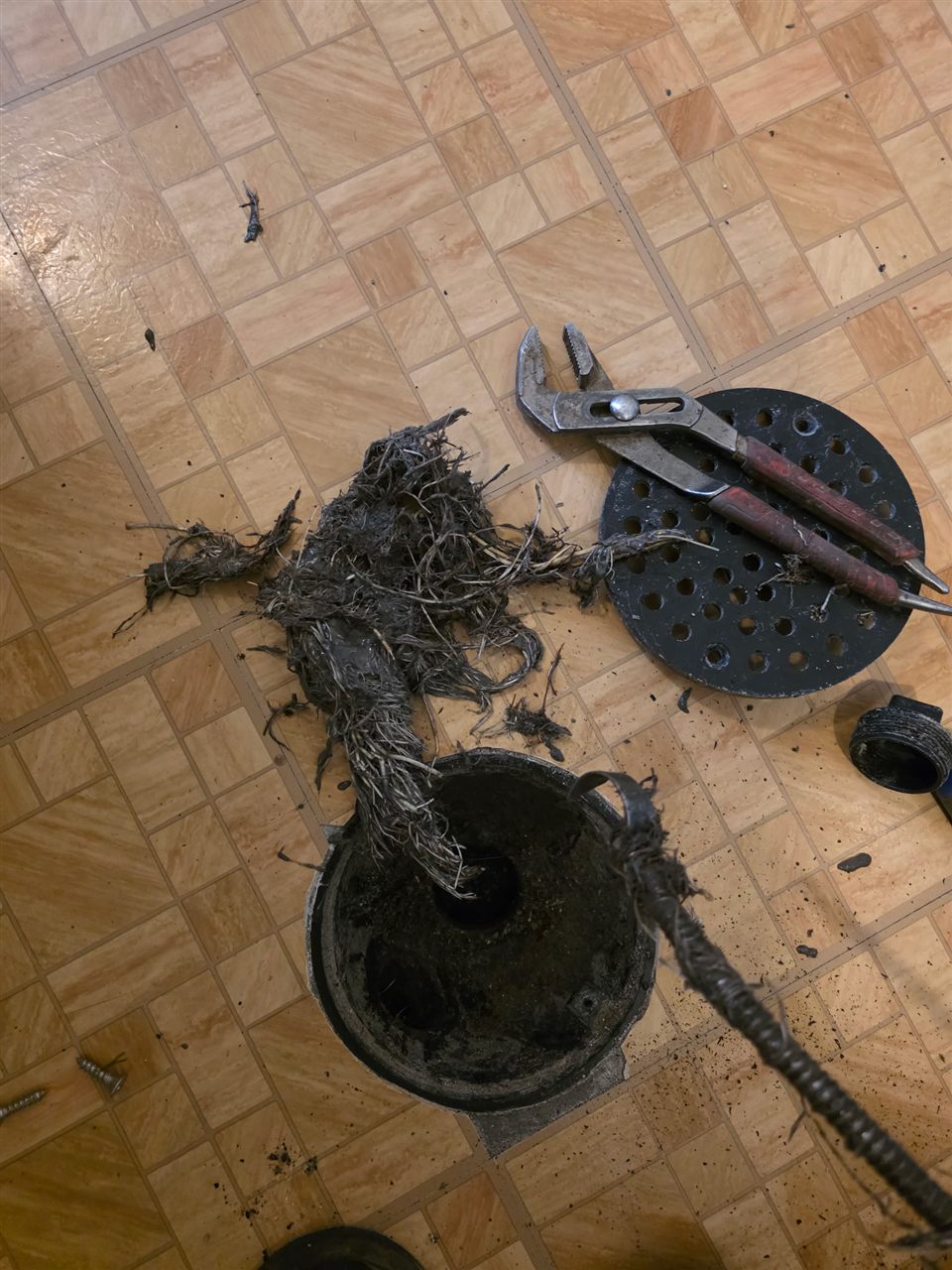
On that Ammon job, the washer line was clogged solid. We cabled it out, pulled the roots, tested the line, and the water ran free again. The lesson worth keeping: if you've got mature trees and an older home, a slow laundry drain or a backing-up floor drain can absolutely be a root problem, not just a "gunk" problem.
Why roots grow back — and what that means for clearing them
Here's the part most homeowners don't hear until the second backup: roots that get cabled out will grow back. Cabling cuts the roots off at the pipe wall and gets your line flowing again — which is exactly what you want in the moment — but the root system in the soil is still alive and still drawn to that same warm, wet line. Given a year or two, it regrows right back to where it was.
That's not a knock on cabling; it's the reality of how roots work. It just means the goal shifts from "clear it once" to "keep it managed." A few tools do that:
- A camera inspection tells us exactly where the roots are entering and how bad the pipe is, so you're making decisions with real information instead of guessing. See our camera inspection page for how that works.
- Annual cabling keeps a known root spot from ever building back to a full backup. If your line has clogged with roots once, a yearly cleaning is far cheaper than an emergency call or a dug-up yard.
- Hydro jetting scrubs the line wall-to-wall with high-pressure water, clearing roots and the scale they cling to all the way back to bare pipe — a deeper, longer-lasting clean than a cable alone.
Rule of thumb we live by: if a line has had a root clog before, it will have one again. The question is whether you catch it on a scheduled visit — or on a Saturday night when it's already in the basement.
Signs roots are getting into your line
- Gurgling toilets or drains — air getting forced past a partial blockage.
- Multiple fixtures slow at once — points to the main or a shared branch, not a single trap.
- Recurring clogs on a rough schedule — clears, works for a year, clogs again. Classic root rhythm.
- Backups during heavy water use — laundry plus showers plus dishes overwhelm a root-narrowed line.
What to do (and what not to do)
If you're seeing these signs, the most useful first move is a camera inspection so you know what you're actually dealing with. What we'd steer you away from: pouring chemical "root killers" from the store as a long-term plan. They rarely reach the full root mass, they're hard on older pipe, and on a septic system they kill the bacteria the tank needs to work. A cable, a camera, and a maintenance schedule do more, and they don't gamble with your pipe.
The bottom line
Tree roots are a slow, predictable problem — and predictable is good, because it means you can stay ahead of it. Find out where they're getting in, clear the line, and put a simple yearly cleaning on the calendar if your line has a history. That's the difference between a routine visit and a flooded basement.
We clear root-clogged lines across all seven Eastern Idaho counties — Idaho Falls, Ammon, Rexburg, Sugar City, Blackfoot, Shelley, Rigby, Ririe, Terreton, St. Anthony, Ashton, Island Park, Driggs, Victor, and Dubois. If your line has a root history, call (208) 523-4212 or visit our sewer line and drain cleaning pages.